RongHua Ching

Traveltip Chinatowns in The Netherlands

Amsterdam

Lonely Planet published, in the travel tips and articles category, some of the World’s best Chinatowns. The Netherlands most famous Chinatown is located in the former Red Light District of the capital city, Amsterdam. For decades, it has been a prominent tourist attraction in Amsterdam. Listed in Lonely Planet’s Best in Travel: Top Ten Cities.

Come visit and have a glance at what the City offers in terms of promising upcoming cultural events and more. Click this link, “I Amsterdam” and toggle the language button in the right top corner. Scroll through or click directly on the main top bar for What’s On or See and Do information.

Important events to watch:
Individuals and their historic homes reveal more about a culture’s history. This theme will be essential to the World Interiors Event 2013. The exhibition is titled “Past, Present, andFuture of Interiors.”

The Hague

Next visit is Den Haag and Chinatown in The Hague Take a peek at this album on the Chinatown Den Haag website. It has followed the example of Chinatown, London, with a Chinese Gate. A significant entrance to Chinatown connects directly with The Hague City Centre shopping area and historical sights for leisurely strolls. Throughout the week and on weekends, there are a variety of events to watch and participate in. Aside from various well-known sites, landmarks, and tours. I recommend signing up for the guided tour at the Dutch Parliament building known as Binnenhof. This is where the Dutch Prime Minister resides in the turret at the corner of the Hofvijver. For a concise overview of sightseeing highlights, read the information on the holland-hotel link.

Rotterdam

Katendrecht was the first Chinatown in the famed port of Rotterdam. Residents preferred to call it as de Kaap. Erika Blikman and Yuen Han Lam collaborated on a project to honour the 100-year presence of Chinese in Dutch society. Their aim was to launch ‘China op de Kaap’ with a young group of enthusiastic designers, artists, and cultural specialists. The website is only in Dutch, yet it depicts an active programme clearly. The project received overwhelming enthusiasm and support. The Kaap today, reflects an eclectic blend of arts and traditions from the Chinese community. Established by the neighborhood’s early immigrants.

De Westkruiskade is located in Rotterdam’s city centre and conveniently near Central Station. Due to the neglect of city planning in the past, Katendrecht saw most of its proprietors move out. Due to the loss of business customers and visitors. New entrepreneurs started their businesses closer to the city with a new Chinatown named Kruiskade. However, it is elusive that next to Chinese, this neighbourhood also includes Dutch, Antillian, Surinamese, and African residents. With many Oriental shops, restaurants, and supermarkets catering to multi-cultural shoppers and attracting visitors on City day trips.

Enjoy great Chinese and other Asian cuisines in Chinatowns in Amsterdam, The Hague, and Rotterdam. Discover these Cities and have a great time with their offerings!

Note: Featured image source: Chinatown Den Haag, copyright: ©Arnhem.nl

Chinese stock methods and variations

Preparing Chinese chicken stock, often a whole chicken is used in recipes. Poultry butchers or supermarket, just choose your preferred cut if you rather like using chicken legs/chops or breast fillets.  You need to watch and adjust the cooking time, however when you can do try an organic corn fed chicken for a flavour range discovery.

Preparing poaching chickens

Seasoning poaching chickens

For a photo overview, click on this link for Hainan Chicken Rice step-by-step or start with the recipe. Here I share my method of poaching and stock variations for different results in flavour and taste with a variety of used ingredients.

Broth method to poach:  In this recipe, I use the whole chicken (chicken fillets or fish fillets), flavoured with Pandan leaves (or in the photo below a bunch of spring onion) garlic, ginger, Chinese wine and dash of pepper, bring to a boil. Add the chicken wait for the broth to come back to boil, turn down the heat, adjusting the level where you can see bubble’s breaking through the surface.

For poaching, it is important to keep the heat near boiling point. The chicken is lightly salted and peppered, cavity stuffed with leek, spring onion or pandan leaves, garlic & ginger slices then submerged into the stock.

Try a variation of oriental herbs and spices (as with court bouillon), this will guarantee a good flavour base and incorporates flavour. Poaching remains and accentuates a burst of flavour impact.

Cook for  15-20 min then turn the heat off it will cook in the residual heat remaining tenderness (if 1-2 chicken fillets only 10-12 min turn down the fire and let it cool in the stock).

Cooking time may vary due to the weight and size of chicken, chicken breast, legs or wings make adjustments accordingly. Rule of thumb, check for an internal temperature reaching 73° C(this level eliminates bacteria) max. 75º C never below!

Another poaching method is to place a double hook under the wings of the bird to slowly submerge into the boiling stock. When the bubbles subside pull out let the stock come back to a rolling point, submerge again and repeat 3-4 times till the meat is done.
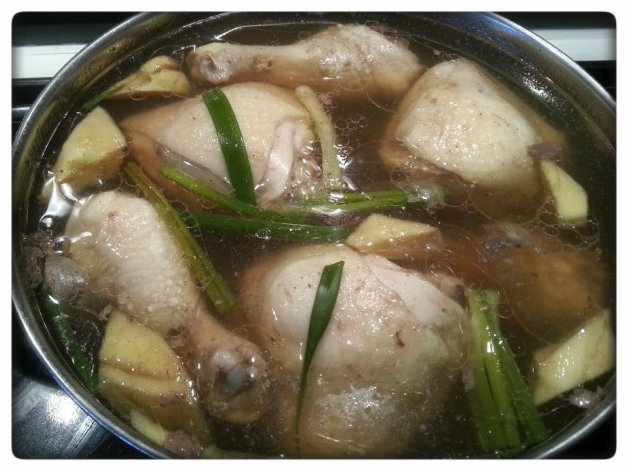
Poaching chicken legs

Poaching chicken legs


Preparing stock method: A standard stock uses pork bones and chickens carcases, which is stronger with more gelatin and intenser taste. Set a pot on the stove with cold water and the bones. Bring to a rolling boil, turn heat down to mid fire and remove all the greyish scum (blood and proteins) which floats up.

Keep skimming the surface constantly. After 35-40 min removes the bones or as soon the grey scum subsides, clear the water. Start frying the chicken fat (if not enough or none available use a bit of lard, this is all for taste). Fry slices of ginger, garlic and spring onion.

Add Chinese cooking wine, salt & pepper as soon as it all releases its aroma add water enough to cover it all this is the base.

To make stronger infused stocks and stews at this point, you can add the following spices e.g. cinnamon, star anise, cardamom, cloves etc roast them first to release their aromas. Using spices in food to enhance flavour also adds a powerful antioxidant puch.

Submerge whole chicken in the stock, depending on size and meat with bones or boneless for 15-45 minutes watching the colour changing from pink to milky white. With time experience will increase to recognise the various stages in the cooking process.

After cooking time has finished lift carefully chicken up and pour the cavity empty into the pan. Plunge the chicken directly into an ice-cold water bowl. This stops the cooking process keeping tender meat with a jelly-like (pale-yellowish) skin. Finish with a final rub using a bit of sesame oil for shine and taste.

Traditionally the cut up chicken meat (Bai Ji) was served with the bone still colouring a tiny bit of red, while the meat is perfectly cooked fully white without any trace of pink meat. You know when the cook kept a close eye because too long means it has lost its tenderness resulting in dry and hard meat.

poaching whole chickens

Submerging whole chickens in poaching stock for 30 min, turn off the fire and with the lid on let it cool down in the stock

Herbal stewing method – a stock filled with medicinal Chinese herbal ingredients and seasonings to extract medicinal qualities. Often in a separate container referred as a “double boiling jar”.

The soup in the double jar is cooked in a pan filled with water, this is a Chinese cooking method called double-boiling. It cooks through the heat of the water and not the original heat source (a bit like puddings in a hot water bath).

Not to be confused with steaming. The double jar keeps all flavour, nutrients and essence all locked in while being cooked for several hours for extraction. This cooking method is mainly used for high regarded medicinal herbal ingredients (often expensive) and/or preparing soup tonics for strength and healing purposes. A step-by-step photo post will follow soon focusing on this technique.

Steaming method – Chicken is chopped in pieces and marinated. Traditional the plate is placed in a wok (or a wide saute pan) on an elevated stand filled with rolling boiling water and a dome lid on top for full circulation of steam. Spread chicken pieces in a single layer on a platter surrounded with other ingredients as vegetables.

Steam approximately 10-12min for chicken breast (thickness may influence steaming time). Using a steam cooking equipment or a rice cooker makes this, even more, easier with automatic settings no need to watch the clock and water level.  When the temperature reaches 74º Celsius/15-20min it is done.

Stove pot/pan method: Without a thermometer keep a close eye to the chicken bones, the meat turns from opaque to white and when the bone has turned light brown, the meat is cooked. However, if the bone turns dark brown in colour it means overdone, still good in flavour but less tender meat.

Stock use characteristics:

Preparing nutritious homemade stock or broth is gaining popularity due to an unbeatable flavour.

  1. Poaching broth for chicken with the liquid often used in stir-fry dishes or a light clear (tea) soup.
  2. To cook the rice in the stock or the traditional way by first stir-frying chicken fat with ginger and garlic. As soon as it releases aroma add the rice while stirring coating the kernels all around (or use a pack Hainan Chicken rice paste). Add the stock and cook the rice till it is done.
  3. As soup base for various type of noodle soups.
  4. As soup base

Hainan Chicken rice

Hainan Chicken rice flavoured with chicken stock or paste.

Serving of Chicken Rice: The Chicken is nicely cut in easy chopstick size with sliced cucumber and tomato complementing the meal. Served with a bowl of clear soup broth sprinkled with green onions or a bit of coriander on top. Accompanying dipping sauces; spicy chilli with ginger paste and dark soy sauce.

For other serving style suggestions and information, read Hainan Chicken Rice foodie chat trivia post.

Stock base variations:

Standard Chinese stock base – boil water add 4-5cm ginger and a whole bulb of garlic (quantities may vary according to weight and personal preferences, but this is what I use for a whole chicken). Additions of Pandan leaves, leek/green onion, Chinese wine, black pepper, use of light soy sauce (dark soy sauce is for colouring the stock more than flavour use sparingly).

Chinese herbal stocks – the above with Chinese herbs to infuse the broth into a tonic to improve and strengthen the functioning of the body or increase the feeling of well-being. Most Chinese households carry their own favourite combination of herbs to aid, but Chinese herbs with medicinal qualities are widely available at Chinese Supermarkets and of course Chinese pharmacies in Chinatown or Traditional Chinese Medicine (TCM) practices.

In Taiwan at the Shilin Night Market there’s a famous stall for 十全汤 literally translated “ten complete soup”, customers would line up every night. The making of this herbal soup starts during the day and simmers for hours impregnating the air filled with herbal fragrance, just smelling would flock customers through the whole evening and night.

TCM practice believes bone broth nourishes our kidneys, supports our “chi” (life essence) and builds blood. Here is a link with informative facts including other recipes “Bone broth for health building” by Jade Institute. Cooking with bone broth especially with pork trotters will make a very good dish and soup stock, in our regional cooking the cooled stock turn gelatinous and is another favourite way to be eaten cold known as “dong jiao” 东郊.

South-east Asian stock base – the above with additions of less ginger or none, with galangal, lemongrass, peppers or bird-eye chillies (hot), few leaves of kaffir lime leaves. Definitely a base for e.g. Thai Thom Yam soups or with the addition of spices as for making Vietnamese Cahn’s.

Meat or Vegetarian stock base –  with or without bones it often has onion, celery, carrots (and leeks). Enrich to get more taste is making use of bouquet-garni as in French cooking, a bundle of herbs traditionally comprises of bay leaf, thyme, parsley. Or an Italian herb mix of basil, oregano, rosemary and sage.

Blanching bones – Set up a pan with cold water add the whole chicken or other parts. The process of blanching chicken, pork meat and/or bones is to remove all impurities (blood and proteins solidify in froth or scum when heated) by skimming the surface and removing it will result in a clear instead of a cloudy stock. When cooking with pork bones I will change water definitely, with chicken it depends on the final dish. If fast and quick, I constantly skim the surface removing all scum till its clear and use the broth to continue or add ingredients for stock making process.

Click on the links for Hainan Chicken Rice step-by-step photo tutorial, background information foodie chat trivia and recipe. By preparing the poaching liquid and making your own stock, most of the work is done. If you have any remarks or questions, please leave your comment here under or send me an e-mail.

Heritage at Pattaya Floating Market (2)

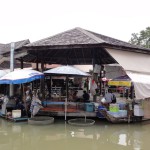
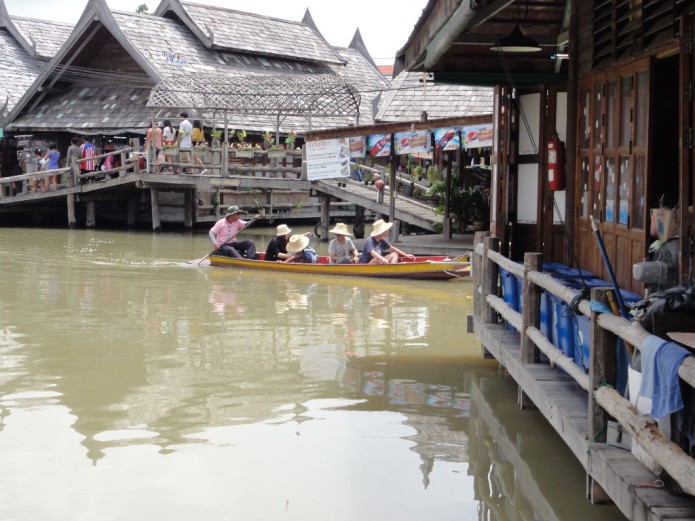
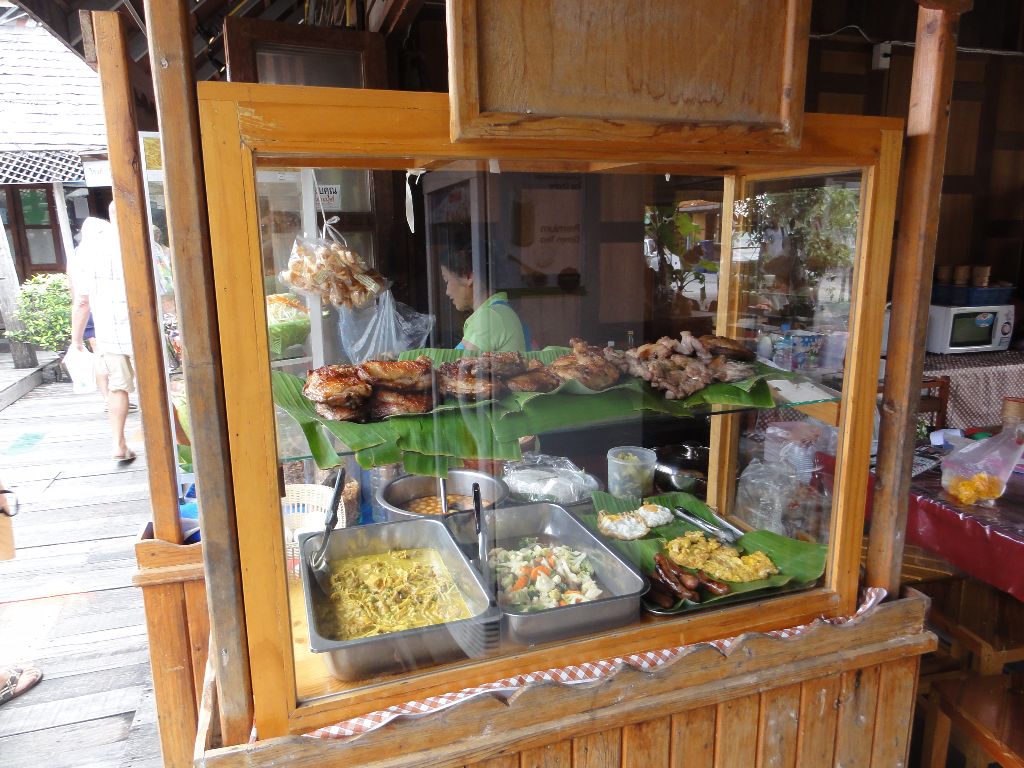
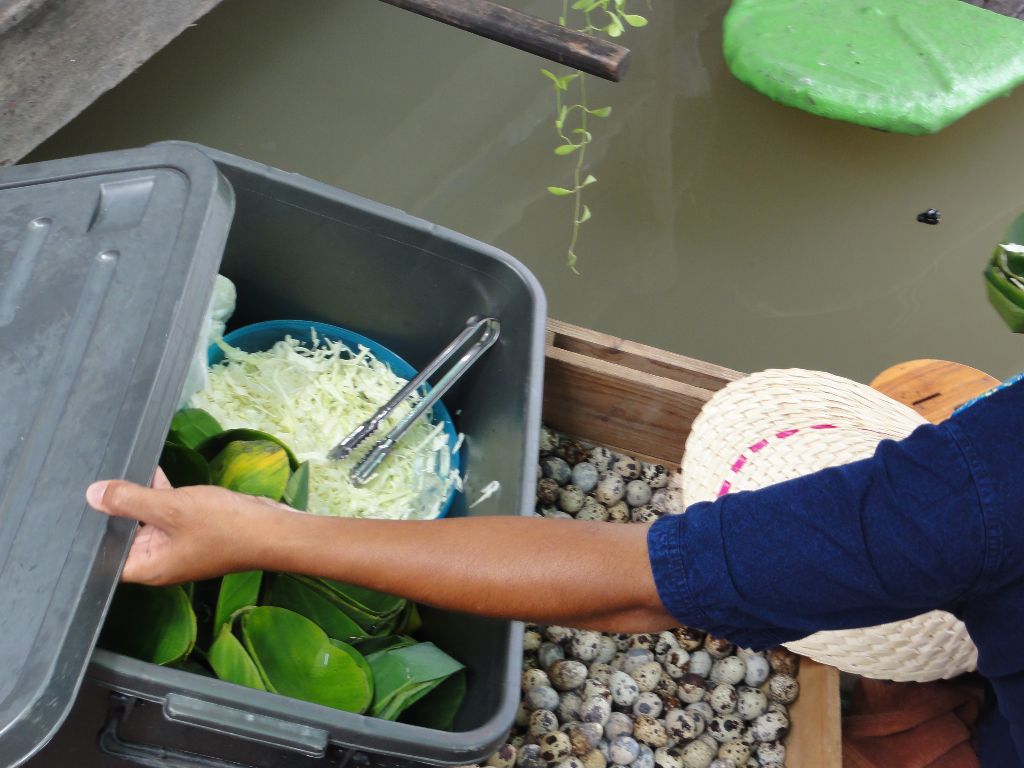
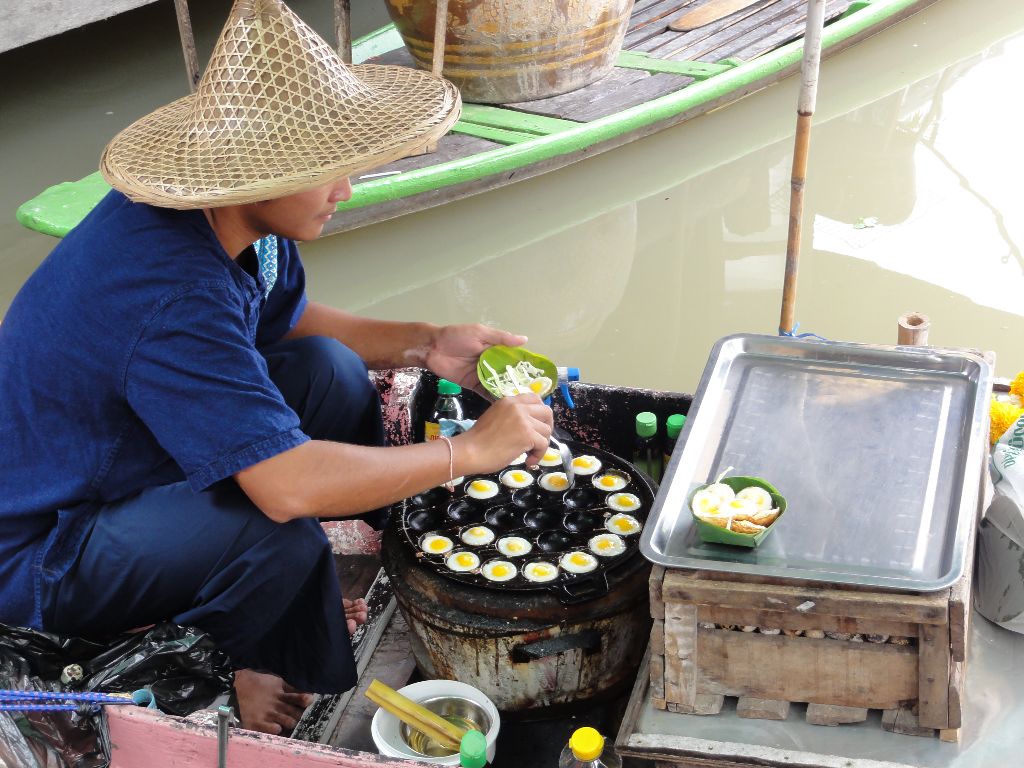
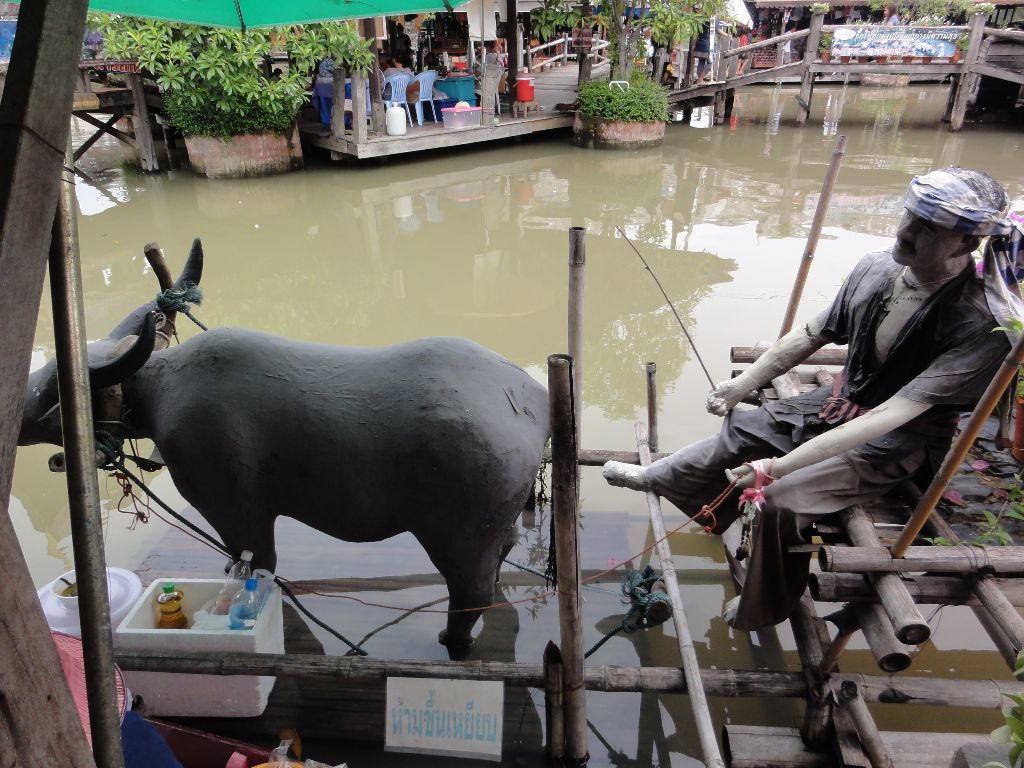
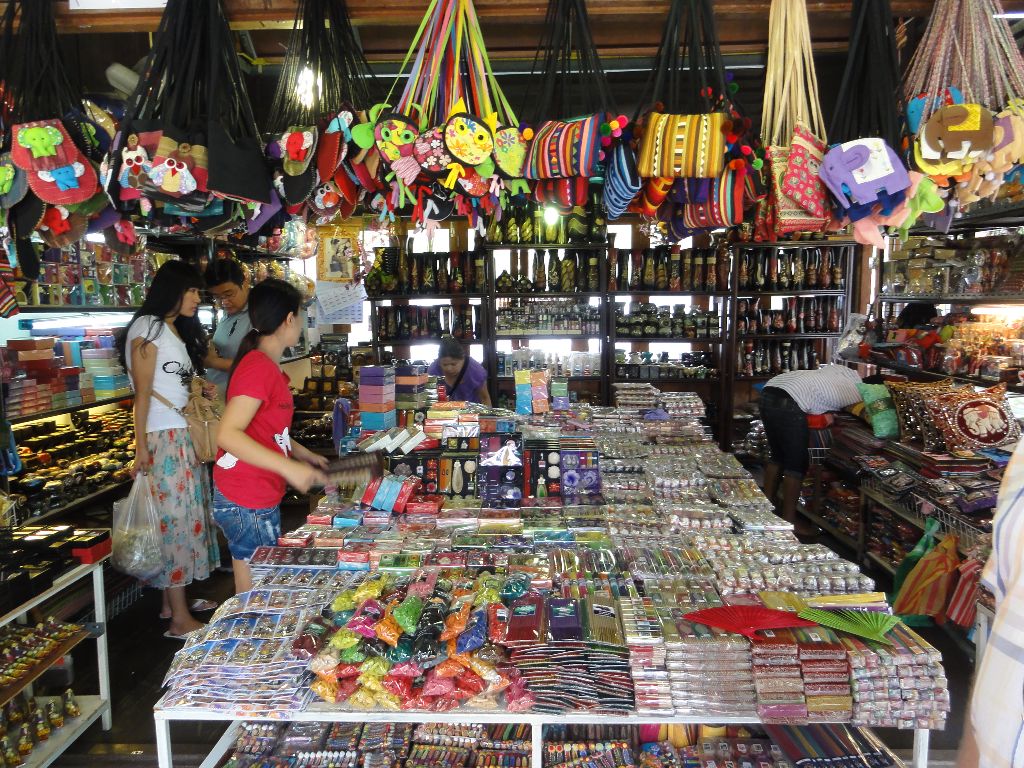
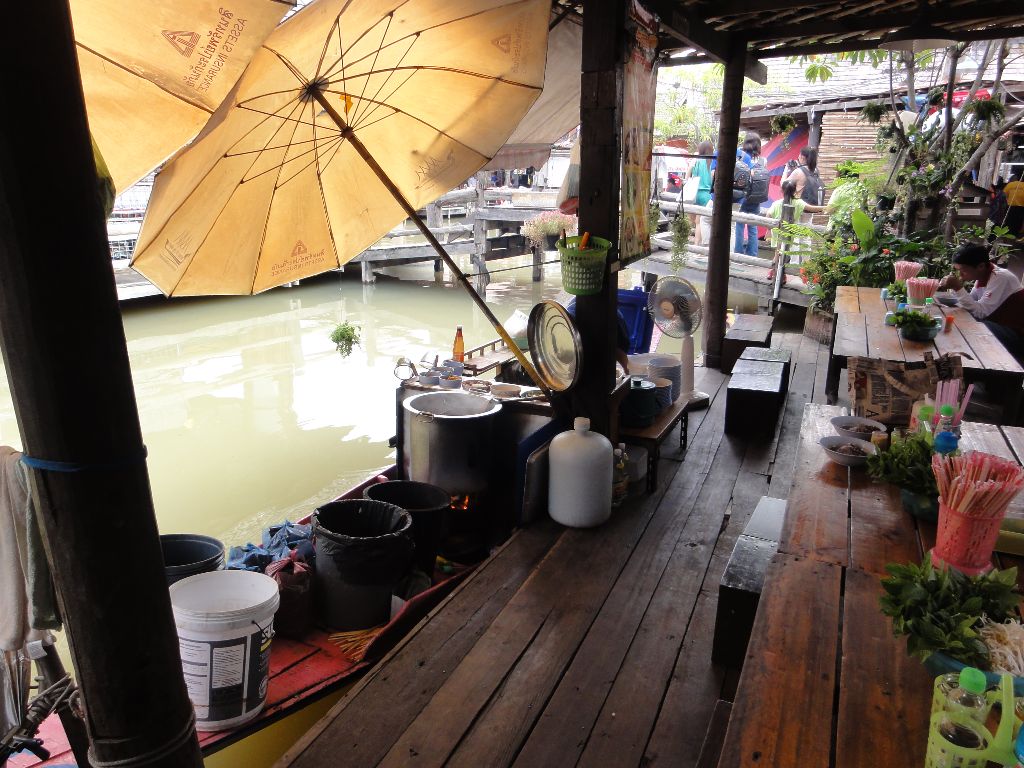
The existence of floating markets in the old days throughout Thailand life was centred on the river, canals and people lived at the banks, so merchants with their products in small boats came floating to their customers. The whole idea of recreating this floating market is an initiative to bring the four areas of Thailand together, displaying their traditional culture and produce. The heritage buildings are built as a representation according to the various styles of homes in the North, East, South and West of Thailand.Entrance is free, you can just wander around the shops and eat. That is actually the best part, sampling food items without too much travelling and if that makes you tired you can take a relaxing foot- or Thai body massage or just sit at the many benches to relax.

Entrance is free, you can just wander around the shops and eat. That is actually the best part, sampling food items without too much travelling and if that makes you tired you can take a relaxing foot- or Thai body massage or just sit at the many benches to relax.

While visiting bus loads of tourists were being dropped straight from Bangkok or coming from Pattaya centre, the whole park is largely setup functioning as an escape from the congested cities. We were better off than the tourist group excursions their visit was timed, with intervals regular announcements filled the air calling the visitors to rush back into the bus for the next attraction.

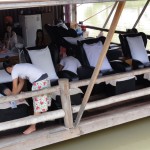
We spontaneously decided to extend our visit, enjoyed a fantastic lunch and due to the rain we willingly seated ourselves in the reclining chairs for a foot-massage closing our eyes comfortably swaying slightly due to the waves of the lake and boats.

Actually, I would dare to say that it’s much more fun to visit the Floating Market at South Pattaya than the Damneun Saduak in Bangkok, which receives much criticism these days due to the dilapidated state it is in now. Which is why the tourist buses are heading this way to get a glimpse of Thailand heritage.

Click on the official Thai webpage Pattaya floating market for information. Open daily from 10 a.m. and 11 p.m.

Floating Market new attraction south of Pattay (1)

Most probably you have heard of Pattaya being mentioned as a night-life City, well that was true in the past. If you are willing to pass the label there’s more to discover, in fact, there are actually sightseeing places and activities absolutely worth the visit which will capture and hold your attention. In an earlier post about Dongtan and Nongmaii Beach Pattaya, I had made reference to Pattaya’s administration working hard on a better image and it’s best to promote the City as a family destination.

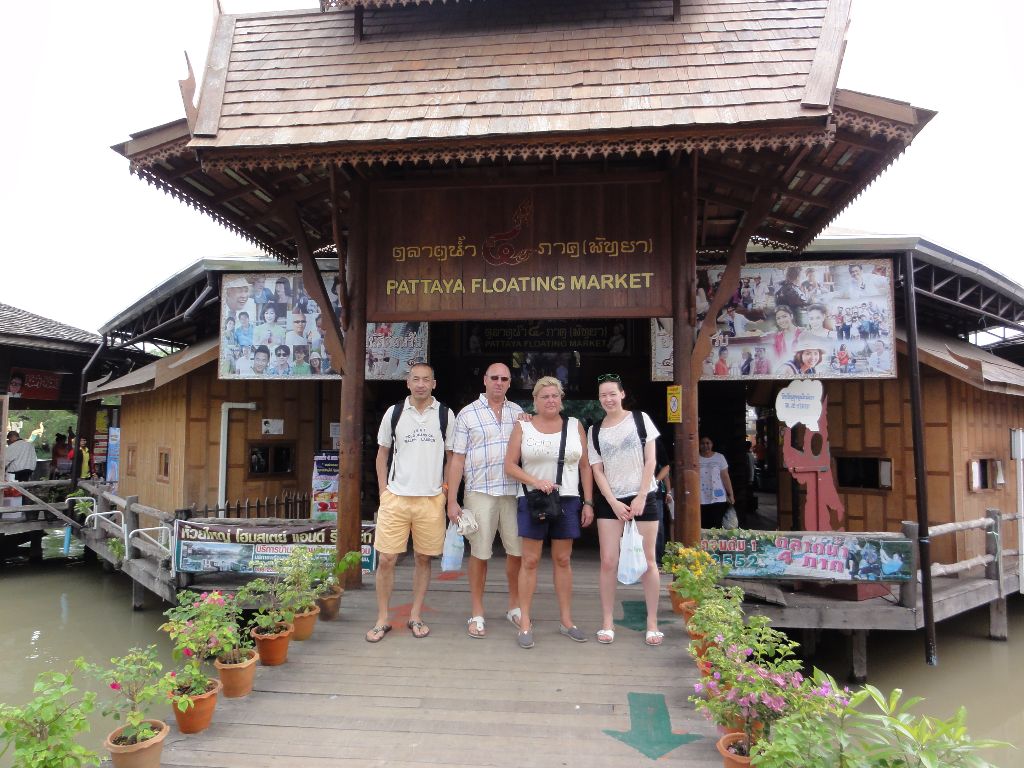
One of the projects we basically have watched being built from a distance, an artificial lake just south of Pattaya on Sukhumvit Road. This has now become one of the largest attraction is known as Pattaya Floating Market. Since its opening, two years earlier we actually entered the premises for the first time bringing guests along. According to our local friends the buildings have weathered down due to monsoons, humidity and being fully operational it has acquired now an even more authentic look. As for our company as first timers, they liked the introduction very much as genuine with traditional and cultural shows, products, boats and all other shops with wares and fares on display for sale.

For a glimpse, just click on the images for a larger view and if it draws your attention to read and see more click on the link “Heritage at Pattaya Floating Market“.

Sweets for my sweets hawkerfood (4)

If there is one stall you will find everywhere it must be the Thai Banana Roti or pancake on almost every corner, bridge, village and city. It is the ultimate favourite snack with many filling variations resembling French-style crepes. Believe me once your home this could be one of those comforting foods, you are craving because they are not easy to get lest to make at home without the art of flipping the roti paper-thin.

And honestly there has not been a visit where we didn’t at least have a few of these munching away. Without a doubt this is a popular sweetie anyone buys and she flicks whipping you to come back for another portion of Banana Roti.

Thepprasit Night Market hawkerfood (3)

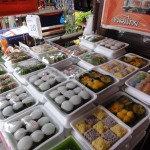
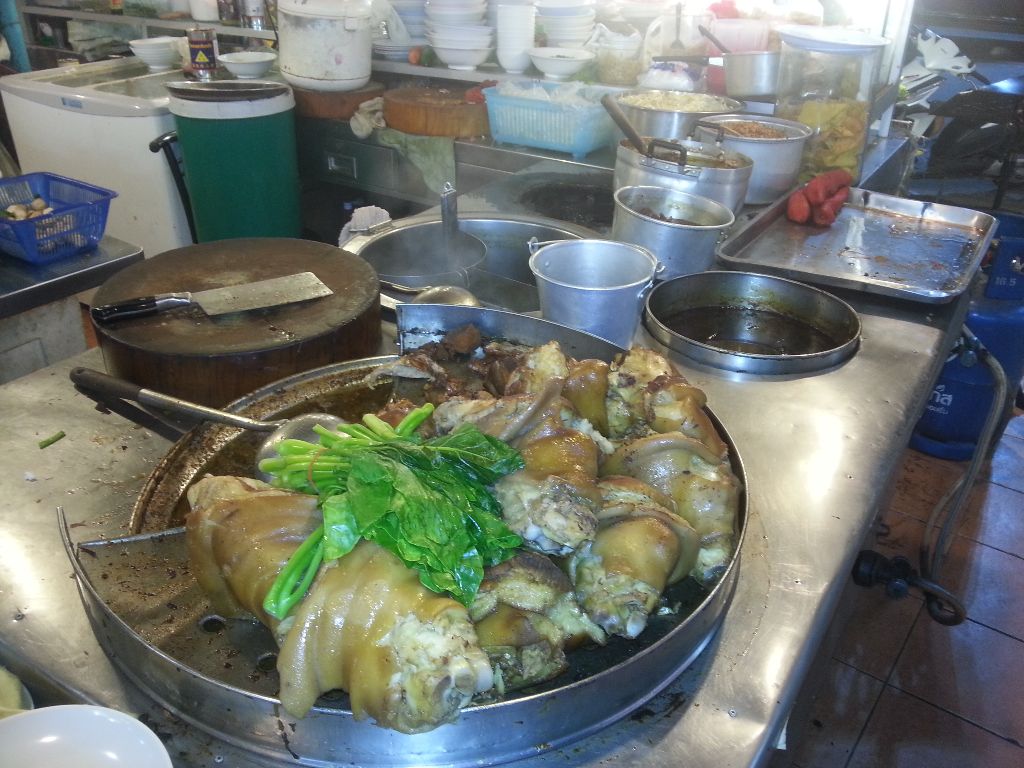
Thepprasit Night Market hawkerfood in Pattaya, is only open from Friday till Sunday starting from 17.00 till 23.00. Besides cheap products attracting a lot of shoppers local and tourists.  it is also very popular for its wide variety of hawker food stalls at the night market. Serving food styles of the four regions all at one place. Here is just a small glimpse of regular hawkers food items.

Thailand night market and street stalls sells edible bugs as delicacy’s, how about deep fried grasshopper. I’ve been told they taste like shrimps or non mai’s a wood wurms these turn very crispy on the outside after being fried. There’s more to learn here in this link Popular Snack food in ThailandThese crunchy bug snacks are high in protein, calcium and cholesterol are actually very nutrious. For the daredevils among us who believe that entomophagy is the future, as in ‘How to cook edible insects’ a link with recipes to experiment.

Eating insects as an alternative protein source is growing in global demand. One of the reasons is research estimations that in the nearby future the world will have 10 billion people. They definitely will require more food, water and agricultural land for crops. But instead of increasing livestock edible insects taste absolutely delicious too. For sustainability purposes they are also significantly easier to farm as well as being very nutrituos with numerous health benefits. For the western menu it needs time to become a daily food item, but here in Thepparasit night market ediblle bugs ares a very popular snack, cheap, tasty and healthy.

More to discover in Pattaya:

Floating Market new attraction South of Pattaya.

Heritage at Pattaya Floating Market 

Family favourite Thai fusion Spaghetti

Whats-for-dinner! The standard phrase coming home with the school bus in Taipei, our kids during their childhood years (14-12-8 and 6 yrs old). In random order but always the greeting came before they entered through the door, whether it was from school, sports or even now grown up and arriving from workplace or study.

Pack of hungry wolves if they brought friends along to play or finish homework, most of the time I had (healthy) snacks at hand but if I was late or not yet home they ransacked the fridge. During our years living in Taipei, I prepared this fusion dish with what I had on hand in the fridge and cupboard for a quick meal.

Which were chillies, cucumber, tomato, bell pepper, black olives, spring onion, coriander, lemon grass, galangal, lemon juice and chicken thighs (for e.g. try Chinese Chicken Wings in a soy-chili marinade). Noodles and Pasta, onion, garlic, staple items with various Asian seasoning’s which included fish sauce among many other flavourings. I just started whipping up this dish, it became an instant hit becoming a regular summer or barbeque meal side dish over the years.

After our kids moved out for studies/work they called home for recipes; advice how-to instructions to prepare comfort food in their kitchens. Our kid’s cravings and questions are what initiated to write down recipes to share and celebrate good food with family, friends around the table. Writing down one recipe snowballed into more request even outside our inner-circle. From phone calls, e-mails, newsletters, social media came around combined with my geeky interest I landed here with a website blog, sharing my in- and outside kitchen adventures.

This is one of our family favourite Thai Fusion Spaghetti, a Ching recipe fusing our European background with Asian flavours. These home-cooked dishes have a blend of ordinary and exotic ingredients, colourful with a mix of spices, fresh herbs prepared and enjoyed together.

Start cooking put your teeth in it and share your comments. I have a food picture logged somewhere will add to the post, but please feel free to upload your result. Ching Thai Spaghetti recipe follows here below, enjoy!

[recipe]

Tropical thunderstorms

image

We`ve encountered numerous thunderstorms in Asia before, as quickly as they come with a hard downpour it vanishes as fast too. Although monsoon season has ended the weather gods assume differently.

While enjoying a foot massage outside a drizzle started and within 15-20min time it  flooded Central Pattaya. Stormy rainclouds accompanied with lightening blazing the sky followed with thunderous cracks. In no time the water level rose above knee-height. A renewed  experience for me, but not our friends. They were just dumbfounded how quickly harmless raindrops could turn into a hazardous rainfall.

We tried to wait it out but eventually you’ve gotta make a dash for transport and a wetsuit. A digital temperature display showed 23.9°C still pleasant, so as the Thai would say “Mai pen rai” meaning never mind/it`s okay. ◆smile◆

Our songtel taxi had to detour twice on route to get us to our destination. After arrival and a hot shower to clean up, night-life resumed and we finally could enjoy the results of our earlier foot massage fully relaxed by closing our eyes. The next morning the sun broke through the sky we decided to visit the beach again to enjoy a different liquid sunshine, a swim in  the Gulf of Thailand on the east coast side.

Road stall hideaway hawker food (2)

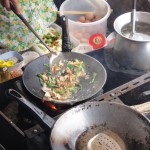
On our previous holidays in Pattaya we would book family-suite hotel rooms/apartments located at Jomtien Beach road, where you couldn’t get passed this hawker food place. Easy to drop in for a quick bite, lunch or dinner, just great dishes with lots of taste on top of that these hawker stalls fit in any budget. Always jam-packed with tourists and locals, can’t go wrong with the stir-fried food in here, the dishes are prepared in woks literally dancing on fiery flames. Make no mistake, we have burned our lips more than once thinking it wasn’t that hot on more than chillies only.

The hawker food place in the pictures is the one where the 7-11 shop entrance is practically build inside this road stall, also recognizable with the salt-crusted barbecue fish on street-side display.

The Som Tam food stall is located at Dongtan Beach in White House, almost next door to Nongmaii Beach Cafe. This is also the only stall where I would order the Som Tam Puma, Papaya Salad with the local delicacy of salted black mini-crabs without having any after trouble. The trick of a good prepared Som Tam is besides fresh ingredients, the pounding and scraping without making it in a mush but just soft enough retaining a crunch with a tangy-sweet-hot dressing perfectly clinging on.


Or-ah-harn Thai restaurant

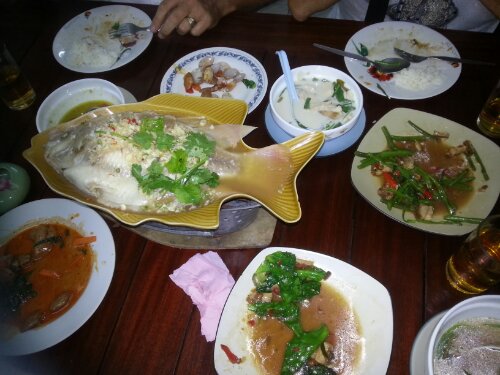
OR-AH-HARN-THAI Restaurant is one of our favorite authentic Thai food restaurants we patronage every visit to Pattaya. We highly recommend this place to enjoy your dinner inside while watching the cooks prepare meals from the tables just behind or walk up to the first floor air-conditioned room. The Thai seafood dishes are amazing, a Must-Eat is the whole fish in Lemon sauce absolutely fantastic! Worth to mention Must-Try to keep in line with all must superlatives.

A to-do for foodies, put it on your list To-Visit secrets in Pattaya or 1000 Places must-see in Thailand before you travel on.

Across the street you’ll find the only electronic building Tuk Com IT Center  located in Pattaya for repair, gadgets, PC and mobile hardware and software. We brought our Laptop to clean & check paid 500Bht done within a few hours. If you like to wait, enough time for a foot massage, lunch or dinner with food stalls and shops a-plenty in this neighborhood.

image

image

image

image