
RongHua Ching

A bit of Tea history of Taiwan

Taiwan pictures digital archives – photo courtesy of Taipics.com

The Dutch East India Company, also known as the VOC (Vereenigde Oostindische Compagnie), after being driven out by Chinese Ming forces near PengHu they arrived in Taiwan in 1623. Quick to recognize profitable sources they protected their trading interests and used the island as a base for trade with Japan and China. However they were later on expelled from Taiwan in 1662 which brought Taiwan back under control of Qing dynasty, now different tea varieties were imported from Fujian to be cultivated in northern Taiwan during the Qing dynasty (1796-1895). The VOC earliest mention of wild tea found growing  in the central mountain region of Taiwan was in 1645 (two wild, indigenous tea subspecies, Taiwan Mountain Tea and Red Sprout Mountain Tea).

China had severe restrictions on trade and Britain ignited the Opium War for tea in 1839 as a result China was forced to open five ports to foreign trade of which two were in Taiwan, Kaoshiung and DanShui. The Dutch built two forts; Zeelandia in Tainan and Antonio (part of the Fort San Domingo complex earlier built by the Spanish 1628). Fort Antonio is locally referred as “hongmao” Red Hair Fort 🙂 or Red Tower, due to the Opium War the British took over and made it their trade consulate. The former British consular residence is a popular tourist attraction since it is located at the DanShui (TamSui) river, during the weekends many locals are found to stroll around the waterfront, old street up to Fisherman’s Wharf relaxing and enjoying sea breeze to cool down.

Map of Formosa by Dutch, photo source en.wikipedia.org


With the open port and trade consulate in DanShui, the Scottish merchant John Dodd arrived shortly during his visit to buy camphor he realized that the land in the region had superb qualities for tea exploitation. Most people have forgotten or not even realize that Taiwan during Qing dynasty was worlds major producer of Camphor. Camphor is used to make celluloid and one of the components to make film, as such you could say contributing to Hollywood’s success early hay days. John Dodd saw the potential of Taiwan Tea and provided loans to farmers to increase tea production. In 1867 he started tea company in WanHua, Taipei City together with Fujian-born Lee importing seedlings from Xiamen and bringing in skilled workers from FuZhou. Selling Taiwanese Oolong Tea as “Formosa Oolong Tea”, aware of British plans to develop a tea industry in India, Dodd’s successfully exported tea in 1869 to England and New York. Without a doubt Dobb and Lee were the front runners of successfully penetrating the global tea-market and sky-rocketing Taiwan’s tea industry together with the economic policy as a basis for the beginnings of Taiwan’s modern international trade legacy set up earlier by the Dutch VOC beginning with the port system facilitated at the time.

We moved to Taiwan in 2000 and in 2001 Taiwan Tourism bureau  launched a new campaign with the slogan “Taiwan Touch Your Heart”, the logo colours basically represented indigenous tribes people with the following text:

200px-Taiwan_Touch_Your_Heart.svg

The “T” represents the sheltering eaves of Taiwan in a symbol of the island as a warm home. The “a” represents the host of this home, ardently welcoming travellers to Taiwan. The “I” is the traveller who has come to visit and is being received by the host. The “w” is the two people, host and visitor, shaking hands and greeting each other happily.The second “a” and the “n” represent the two sitting together, drinking tea and chatting casually. In the upper right corner of the logo is an image of the island that expresses Taiwan’s earnest and sincere desire to “Touch your Heart.”

We travelled on to our next destination, but our sojourn was absolutely amazing. The campaign was a beautiful and a well thought enterprise to market Taiwan it really embodied what we experienced. We can full heartedly confirm that visiting this ‘beautiful island’ is absolutely worth the discovery to plan as your next holiday destination.


Herbal Gan Mao Cha cold remedy tea

Weather alone can’t make a person ill, but changes in weather are accompanied by a host of other changes that can give a person flu symptoms. Our body is used to function in a consistent environment. With the change of Season’s the temperature changes forcing our body to re-adapt. During this period our immune system can be vulnerable to contagious cold viruses or other infections.

The more reason to avoid the seasonal sniffles and have cold remedies at hand for me preferably herbal products. Herbal teas are my favourite way to ingest medicinally concoction either hot or at room temperature.

Herbal tea is a beverage made from the infusion or decoction of herbs, spices, or other plant material in hot water, and usually, does not contain caffeine. Alternate popular terms for “herbal tea” are “tisane,” “botanical” and “herbal infusion.”


Amazing Oriental Supermarkets, a new arrival at the tea section, herbal brand “Four seasonal Instant Tea for Fever Relief & Cold“.  Just looking at the composition of the herbal ingredients list and the fact that it is an instant drink made me decide to purchase and try at home. Normally I would choose the medicinal dried herb mix packages. To brew herbal tea isn’t that difficult it only needs time to steep slowly to extract all the beneficial nutrients. If time is not at hand using a package of instant granules is a time saver.

Herbal Gan Mao Cha

I enjoy to drink Four Seasonal instant herbal tea and must say the medicinal herb complex works well for me, using two bags at the time. The nourishing herbs really aided to relieve my cold infections by reducing coughs and phlegm. The herbal tea has a minty sweetness and a slightly bitter aftertaste due to licorice but pleasant, you can always add a bit of honey extra in your mug. 

The bag contains 16 packages, just tear a package open add hot water in a mug, pour in the granules, stir and voilà. Easy does it! Promotion purchase forgot the exact amount “Instant tea for coughing” approximately € 3,75  that is cheaper than most standard medicines and cough syrups.

Holy molly, need to stock on these herbal instant tea fast.  Note: This is not a sponsored post, item is purchased for own personal use as healthy home treatment. Tested for my own benefit in speedy recovery. Try and use at your own discretion.

Gan Mao Cha beverage

Herbal instant tea

  • Product name: Four Seasonal Fever Relief & Cold tea instant herbal drink 四时 清热感冒茶 – 固体饮料
  • Description: Taken in the early stages of a cold or flu, this Chinese herb formula helps to alleviate the symptoms and shorten the duration of discomfort.
  • Herbal Tea Ingredients: White sugar, honeysuckle, Mulberry leaf, Peppermint, Herba lophatheri, Reed Rhizome, Radix platycodonis, Licorice.
  • Direction for use: 3 – 4 times daily, 1 -2 bags each time with hot boiled water.
  • Manufacturer: Guilin Gexianweng Pharmaceutical Co. Ltd. China.
  • Nutritional value: Per serving 40 Kcal.
  • Price: approximately around € 3,75

Teatime stories: Gunpowder & Moroccan tea ceremony

It’s amazing how far tea has travelled from its origin China in the Far-East to the North-West of Africa to Morocco. The MingDynasty voyages of Chinese admiral ZhengHe, he commanded the treasure fleet for the expeditions and during his fourth voyage, he reached Hormuz in the Persian Gulf and from there on to the Arabian Peninsula and East Africa.

Although little is known about ancient relations, there is evidence of early trade connections and written record of the journeys of Moroccan scholar and traveller Ibn Battuta to parts of China. Who most likely has heard the first news about the fleet of Chinese Treasure Ships visiting Arabian peninsula or later on when he arrived in Somalia.

At the time Admiral ZhengHe was on his sixth or perhaps seventh voyage exploring Africa and Ibn Battuta’s travels are equally fascinating stories. He is most likely the greatest traveller who originally set out to complete Islam’s traditional “haji” pilgrimage to Mecca and wandered for nearly three decades travelling extensively before returning home to Morocco.

He recorded voluminous observations, notes, insights and lessons learned. Ultimately compiling his travel journal in the ‘Rihla’ which literally means journey, a very interesting and highly entertaining recommendable book to put on your must read list. Click here for a free download link copy.

Chinese tea has become ingrained in Moroccan culture with its own tea art form. With respect to the timely process of making the tea, Moroccans adhere to the saying “Insha Allah”, which means with God willing, all good things will come with time. Touareg tea, also called Tuareg tea, Mint tea or Moroccan mint tea is a flavoured tea prepared in Arabian countries, France, Islamic Africa and Spain. Mint tea is central to social life in Maghreb countries.

The serving of mint tea can take a ceremonial form, especially when prepared for a guest. As a rule, whereas cooking is women’s business, the tea is a male affair: the head of the family prepares it and serves to the guest, usually, at least three glasses of tea. The amount of time the tea has been steeping gives each of the three glasses of tea a unique flavour, as described in this famous Algerian proverb:

Algerian Proverb Tea

Tuareg comes from the word Targa, the Tuareg people of the North African Sahara, whose camel trains historically ran the Saharan trading routes. Ancient tax records show that Arabs were trading with tea as early as the 9th century, but in Europe, the trend did not take on until much later.  According to the Moroccan trade ministry, Morocco imported more than $56 million worth of Chinese tea during the first half of 2006. Morocco is considered the first importer of Chinese green tea worldwide and China its main provider.

With a preference for gunpowder tea (珠茶  zhū chá), a form of green Chinese tea produced in Zhejiang Province of China in which each leaf has been rolled into a small round pellet and derived its English name due to its resemblance of black gunpowder grains.

Maghrebi Mint tea Morocco Source: Wikipedia

Maghreb Mint Tea Wikipedia:  The method of preparation of atai is relatively complex and varies from region to region. It is normally sweeter in the north of Morocco than in the south, and in some places, pine nuts are added. In the winter, if mint is rare, sometimes leaves of wormwood (Chiba or Sheeba in dialectal Arabic) are substituted for (or used to complement) the mint, giving the tea a distinctly bitter flavour. Lemon Verbena (louiza in dialectal Arabic) is also used to give it a lemony flavour. An authentic recipe follows here below, for a variation on Moroccan Mint tea my style, click here.


Moroccan Mint Tea my style

Moroccan Mint Tea my style

Moroccan Mint Tea my style

While the sun is coming out, our little urban garden comes to live with visits of feathery friends in all sizes and Spring is showing by colourful daffodils and other flower buds growing as well as herbs. Mint hasn’t grown abundantly yet so I have to buy them at the local market or Moroccan, Turkish neighbourhood grocery shop. The other week I had bought a little glass teapot with a strainer at the Chinese supermarket, to make different brews in small quantities instead of our large insulated teapot or other tea vessels.

Moroccan Mint Tea my easy style; instead of using classic Chinese Gunpowder tea 珠茶  zhū chá I tried a different tea from my tea box; Sri Lanka, Geragama single estate unblended tea. Besides Chinese teas, I am very fond of Ceylon’s Earl Grey which was packaged in the Tea Garden at the estate as well as the unblended version. I just wondered whether this concoction would be as enjoyable as brewing original manner, my daughter and I can wholeheartedly say yes. I only had mint but if spearmint comes up I’ll definitely combine the two together for an even mintier infusion making hot and cold mint tea versions.

An authentic Moroccan tea ceremony is where the tea is steeped in boiling hot water for 15 minutes then the water is filtered without stirring into a different pot, the reason, therefore, is to remove coarse powder and leaves. Next, the sugar is added and is brought back to boil over medium heat, so that the sugar slowly melts into the water thereby giving it a distinctive taste. Lastly, the mint is added but never left in longer than two minutes, left too long it can develop an astringent taste and cause with some acid reflux. Part of this old tradition and process lies back in history when tea plantation process was different from the present due to the influence of hygiene standards, production process and even sugar production underwent changes in quality. Although steeping tea leaves remains the same, the timing, quality of water and watching the ceremonious handling is the heart of it all enjoying tea as a drink together.

[recipe]

Osmanthus Oolong tea, Teacup trails stories

Gui Hua Cha - 桂花烏龍茶

Gui Hua Cha – 桂花烏龍茶

I’m without a doubt a coffee junkie as well as a tea addict, with preferences for original tea leaves than ordinary teabags. Freshly brewed teas, steep straight into an original porcelain teacup or earthenware mug with a strainer or a glass mug.  The featured photo shows the large orange canister “GuiHua Wulong Cha” 桂花烏龍茶 or Osmanthus Oolong Tea produced by Ten Ren Tea, Taiwan. Read my very first introduction to the Osmanthus flower tree story here.

Just the combination of thinking about my favourite teas, tea shops with special tea’s I so much enjoyed, it brings forth even more stories and anecdotes. Discovering ‘My Teacup” trails, we’ll share a pot with tea leaves information and savour each sip. A world of tea I had no idea before there is so much more to tea than you might have thought. In distinction to Wine and Whisky sommeliers, Coffee connoisseurs; baristas, Tea sommeliers experts are on the rise. Sharing knowledge on Tea gastronomy promoting and marketing worlds finest eclectic Teas, it’s hip and trendy as ever.

Osmanthus Tea is composed of the high-quality Taiwanese Oolong tea scented with fresh Osmanthus flowers. Osmanthus is an evergreen shrub with attractive foliage and clusters of small, very fragrant flowers. These flowers are also used in some of the world’s most famous and expensive fragrances. This type of tea is categorised as scented tea’s, made by mixing various flowers and petals with green or oolong teas and among these is worldwide known Jasmine tea.

Osmanthus Oolong tea, Ten Ren Tea

Osmanthus Oolong tea, Gui Hua Cha, 桂花烏龍茶

Description names:  GuiHua Wulong Tea or  Osmanthus Oolong Tea

Origin:  Taiwan, (is a large producer of Oolong Tea with high-quality grades and distinctions)

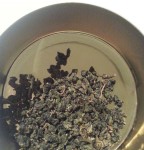
Tea type & features: Oolong mixed scented tea, rolled tea leaves when steeped some tiny little white/yellowish petals may appear.

Brewing: 2-3 grammes of tea leaves for every 150ml of water

Preparation: Place the tea leaves in the scalded pot or cup. The amount is a matter of taste; say, 3 grammes per cup. Add some cold water before adding a small amount of boiling water. This is to keep the temperature below 80 Celsius; green teas should never be subjected to boiling temperature. Leave to steep for 5 minutes. The first decoction may be either discarded or drunk according to preference. This preparation is according to Chinese medicine practice another oolong tea preparation with more elaborate information click here.

Taste: One single sip produces a fullness of rich and mellowness, with a lingering sweetness and a clean aftertaste together with the osmanthus scent lingering on.

Osmanthus Oolong tea, rolled leaves

Rolled leaves

Oolong tea is a semi-fermented tea which is known for its rich taste and pleasant lasting aftertaste. Oolongs are further classified as Dark or Green with Dark Oolongs baked longer than Green Oolongs. Green Oolongs (which are not related to Green teas in any way) tend to have a stronger fragrance while Dark Oolongs tend to have a stronger aftertaste. Special Baked Oolong is the only Oolong that is an intermediate Dark-Green Oolong. Ten Ren Tea”


On another note:

The brewing method used for Wulong tea throughout China and Taiwan is the Art of Gongfucha 工夫茶, where plenty of leaves are skillfully brewed to perfection in a very small teapot and the fragrant concoction is sipped from fine porcelain tiny teacups. Gongfucha is often referred to as ChaoSan Gongfucha as the original place where making “tea with effort” was an integral part of daily life. Gongfucha is also written as 功夫茶 referring to the skill, for linguistics semantics do matter but for tea aficionados and critics, the taste, fragrance and serenity enjoying a hot brew weighs more than words.

Gui Hua tree

Gui Hua tree

It is believed that in Fujian province, Chaoshan area the local Chaozhou (Teochew) people started this tradition of tea culture. Early settlers who moved to Taiwan have brought the custom along with them, where the tea ceremony has evolved in a masterful art performance as also influenced by Japanese culture (Japan first invasion was in 1874 and ruled as a colony from 1895 till 1945).  Click on the following link to read more about: “A bit of Tea History of Taiwan”.

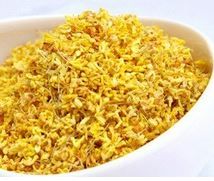
Dried Gui Hua flowers

dried Gui Hua flowers

In the past I had to bring dried Gui Hua flowers with me on my travels, nowadays these very fragrant dried flowers are available at the larger Chinese supermarkets. Enjoy your GuiHua Wulong or Osmanthus Oolong tea and please share your palate experience and favourite brand with us.


Cinemasia Film Festival

Woohoo!! 7th CinemAsia Film festibal is coming at De Balie, Amsterdam, for online purchase click here.

The 7th edition of the CinemAsia film festival will take place on April 1st until 6th at De Balie in Amsterdam. CinemAsia is the gateway to Asian cinema in The Netherlands with films from China, Japan, Korea, India, Indonesia, Philippines and more. The eclectic festival programming runs from the large Asian blockbusters, independent films to inspiring documentaries that have never been seen before in the Netherlands. CinemAsia also acts as a media platform promoting visibility of Asians in film, television and media in The Netherlands.

Cinemasia Who are they?

CinemAsia Film Festival was started in 2003 to stimulate Asian cinema within the Dutch film industry and to offer a creative platform for Asian-Dutch residents and media professionals in the field. CinemAsia focuses on independent Asian diaspora films exploring the multi-facted culture and identities. Through our programming, we try to make Asian immigrants in the film industry more visible in order to resist stereotypical images in the media. CinemAsia is the only festival in the Netherlands and in Europe that works with Asian programmers, employees, volunteers, interns, and filmmakers with a goal to promote Dutch-Asians in leadership and creative positions in the media, film, and television industry.

CinemAsia Mission?

Visibility of Asian diaspora:
In the media as well as in the political realm, Asian immigrants are invisible. And when Asians are visible, they mostly have a stereotypical role. You can think of ‘the Asian nerd’, the Chinese takeaway, et cetera. Through its programming, CinemAsia tries to make Asian immigrants in the film industry more visible in order to resist stereotypical images in the media.

CinemAsia also tries to support filmmakers with an Asian origin in the Netherlands. CinemAsia is the only festival in the Netherlands and in Europe that works with Asian programmers, employees, volunteers, interns and film- makers with a goal to promote Dutch-Asians in leadership and creative positions in the media, film and television industry.

Pan-Asian platform:
CinemAsia is the only pan-Asian festival in the Nether- lands that has as a goal to bring different Asian com- munities together by searching for connections outside the ethnic origin. CinemAsia has developed positive connections with different Asian communities and aims to bring these relationships together through the festival. With this platform CinemAsia offers new networking op- portunities and partnerships for Dutch-Asians and media professionals.

CinemAsia Film Program & Tickets:

Film Program will be available on-line mid-march, ticket sales starts on 20 March 2014 at De Balie or online click here.

This edition CinemAsia opens with the national premiere of the Korean blockbuster SNOWPIERCER (2013) by Bong-Joon Ho, the Korean masterpiece that resembles the growth of Asian cinema on the global arena.

“Save this eccentric masterpiece from Hollywood! It’s the train movie to end all train movies, a dystopic vision full of vivid characters, dark humour, awe-inspiring revelations and surreal imagery” – The Telegraph
“A rare high-end sci-fi/fantasy pic!” – Variety
“Avert your gaze from Hollywood and look to Korea for Snowpiercer!” – Grolsch Filmworks

Maids silent slaves exploitation

Last Sunday the Guardian posted an online editorial: “Slavery is a violent and cruel trade that the world must finally stamp out” based on the Oscars nomination which was awarded later that night for best picture category: 12 Years a Slave, the true story of Solomon Northrup who was kidnapped and sold into slavery. Click on the title link for article, here is an excerpt;

“Modern slavery is every bit as cruel, dehumanising and violent as the portrait painted in 12 Years A Slave. But with greater mobility, transparency and international institutions who could work in unison, it is unforgivable that it remains a crime largely hidden from view. At this rate, it might well be another 150 years before the scale of the horrors visited on so many to force them into labour is properly apparent.” ….

The UN Office on Drugs and Crime (UNODC), what is Human Trafficking?

Article 3, paragraph (a) of the Protocol to Prevent, Suppress and Punish Trafficking in Persons defines Trafficking in Persons as the recruitment, transportation, transfer, harbouring or receipt of persons, by means of the threat or use of force or other forms of coercion, of abduction, of fraud, of deception, of the abuse of power or of a position of vulnerability or of the giving or receiving of payments or benefits to achieve the consent of a person having control over another person, for the purpose of exploitation. Exploitation shall include, at a minimum, the exploitation of the prostitution of others or other forms of sexual exploitation, forced labour or services, slavery or practices similar to slavery, servitude or the removal of organs. (Source: https://www.unodc.org, United Nations on Drugs and Crime)

Trafficking is the Act, Means and Purpose, these are the elements of criminalization and UNODC marked a milestone in international efforts to stop the trade in people with The adoption in 2000 by the United Nations General Assembly of the Protocol to Prevent, Suppress and Punish Trafficking In Persons, Especially Women and Children. Translating the protocol into reality remains problematic. Very few criminals are convicted and most victims are probably never identified or assisted.

Maids silent slave exploitation

Who pays? Not the maid, please - the online citizen

Who pays? Not the maid, please – the online citizen

This Facebook post was brought to our attention through our social media connections titled; “Who pays, not the maid, please!” published in the Online Citizen and know that similar stories from Philippine maids occur in the Middle East as well living in abusive employments. Click on the title link to read the post, here is an excerpt: “And now when someone asks `Who pays?’ I presume that they want the maid to bear the burden. They already do. And most of them have to work for 10 years or more to get themselves out of the debt they’re in. These stories in the New Paper, they ask for more protection for the employees against the already defenceless maids. And all this time the Singapore government is collecting half the amount of money a Singaporean has to spend on a maid, they call it a LEVY. They’re the biggest fat greedy agent, every maid in Singapore they collect their toll of the maid’s blood and the employer’s blood. And still, with all the money they collect they don’t protect the maids properly, they make ineffective laws (they weekly day off rule is a bloody stupid joke, nobody cares about it and the idiot who made the law doesn’t care too!).

And so when somebody asks `Who pays?’, after laughing, I hope that everybody realises one of the axiomatic answers should definitely be `Not the maid, please!’

A very well written true account, not a movie, a cry to be heard. The article was written as a response to an on-line article titled: “When maids want out, who pays?” with the closing line; “In Ground Zero, the heartlands ponder why there is not more protection for employers too.” The content is short and not significant but your reaction changes when you read the local posted Facebook reactions and other comments.

Free the Slaves

http://www.emancipasia.org image source: freetheslaves.net

Just wonder when services in a market with supply and demand have turned into war zones in domestic households, with injured parties on both sides. However workers are more often than not defenceless wilfully “neglected” by employers, officials and the public. Reading through the articles and comments on both sides one can not help but notice that local government could have done a better job towards both parties beside pocketing on both sides, instead of aiding better regulations and work conditions. Around the world immigrant workers have been for centuries easy marks, now called modern slaves is actually disgusting when governments fail to protect by not implementing and applying protocols with right actions. Far gone are the sugar plantations, instead, it has moved literally back in the modern household “maid slave exploitation” version 1.0 running up to 5.0 and higher?!

In The Guardian, a previous article published last January 2014 titled; “When is a slave a slave?” refers to the debate about definitions and what it is we seek to change. Click on the title link for a full read, here is an excerpt:

“Certainly, to call something slavery helps to raise attention and to galvanise action. But will it help end the misery of poor and distressed people the world over? No. Ending slavery or forced labour requires targeted action to change laws, to bring offenders to justice, to protect victims and to empower those at risk. While some measures of prevention, such as eliminating abusive recruitment and wage payment systems or enabling children to attend school, can go a long way in addressing systemic problems of injustice, much more is needed to eradicate child labour and to ensure decent work for all. Hence, definitions help to narrow down a problem and to target our action.

Clear definitions are also necessary for measuring change. Only by quantifying a problem are we able to understand whether it decreases or increases over time and whether we are on the right path solving it. Some problems are easier to measure than others and everyone would agree that measuring slavery poses many challenges. The hidden nature of the problem, political sensitivities and ethical considerations make it very difficult to implement national surveys on the basis of which reliable global data can be generated.”…

Modern slavery exploitation it still exists, it must be stopped, period.

Book: Outliers, the Story of Success by Malcolm Gladwell

Malcolm Gladwell is the author of five New York Times bestsellers; The Tipping Point, BlinkOutliers, What the Dog Saw. He has been named one of the 100 most influential people by TIME magazine and one of the Foreign Policy’s Top Global Thinkers. He has explored how ideas spread in the Tipping Point, decision making in Blink, and the roots of success in Outliers

On LinkedIn platform group discussions a topic came by which caught my attention “Do the math – why Shanghai’s children rule the world”, based on the book “Outliers” from Canadian award-winning writer, Malcom Gladwell,


Rice Paddies and Math tests click on the link for a summary of Chapter eight. Update by Enotes.com on 18-12-2017 (Gladwell website is under construction, the original link will be restored when made available).

“No one who can rise before dawn three hundred and sixty days a year fails to make his family rich.”

Take a look at the following list of numbers: 4,8,5,3,9,7,6. Read them out loud to yourself. Now look away, and spend twenty seconds memorizing that sequence before saying them out loud again.If you speak English, you have about a 50 percent chance of remembering that sequence perfectly If you’re Chinese, though, you’re almost certain to get it right every time. Why is that? Because as human beings we store digits in a memory loop that runs for about two seconds. We most easily memorize whatever we can say or read within that two-second span. And Chinese speakers get that list of numbers—4,8,5,3,9,7,6—right every time because—unlike English speakers—their language allows them to fit all those seven numbers into two seconds. . . .

The Asian system is transparent,” says Karen Fuson, a Northwestern University psychologist, who has done much of the research on Asian-Western differences. “I think that it makes the whole attitude toward math different. Instead of being a rote learning thing, there’s a pattern I can figure out. There is an expectation that I can do this. There is an expectation that it’s sensible. For fractions, we say three fifths. The Chinese are literally, ‘out of five parts, take three.’ That’s telling you conceptually what a fraction is. It’s differentiating the denominator and the numerator.
The much-storied disenchantment with mathematics among western children starts in the third and fourth grade, and Fuson argues that perhaps a part of that disenchantment is due to the fact that math doesn’t seem to make sense; its linguistic structure is clumsy; its basic rules seem arbitrary and complicated.When it comes to maths, in other words, Asians have a built-in advantage. . .

The discussion topic was contributed with the following note and question: “The Chinese languages lead the world for speed and memorability -a natural advantage in simple maths. But how do they match up on complex, engineering-style calculations? What happens when you add symbols to number in Chinese?”

The thread developed with various comments adding to the discussion and links, an article published June 2012 in The Telegraph “Numeracy campaign, what we can learn from China. Here below is an excerpt, for the full read click on the provided link.

“Among other factors he highlights is quality of teaching. “Everyone who teaches maths in China is what is called a ‘subject-specific teacher’. So when I was in the classroom, I only taught maths.” The same is true of Singapore’s secondary schools. But in Britain, fewer than five percent of primary teachers have maths degrees, and an estimated 30-40 percent of GCSE maths lessons are taken by teachers with qualifications in other subjects..”
So can we change the culture around maths here? “In many schools, I have seen in Britain,” suggests Professor Fan, “there is good practice in maths, but in others, there isn’t that culture of expectation.”

A more recent article featured in The Economist February 2014, Teaching mathematics – Time for a ceasefire; “Technology and fresh ideas are replacing classroom drill—and helping pupils to learn“. Click on the link for the full article read, here below is an excerpt.

“Maths education has been a battlefield before: the American “math wars” of the 1980s pitted traditionalists, who emphasized fluency in pen-and-paper calculations, against reformers led by the country’s biggest teaching lobby, who put real-world problem-solving, often with the help of calculators, at the center of the curriculum. A backlash followed by parents and academics worried that the “new math” left pupils ill-prepared for university courses in mathematics and the sciences. But as many countries have since found, training pupils to ace exams is not the same as equipping them to use their hard-won knowledge in work and life”.

This post is based on Malcolm Gladwell’s book titled “Outliers”, the Story of Success; focusing on intelligence and ambition in relation to persons who stand apart because of making most of their human potential. He argues skilfully that in order to understand how some people thrive you must take more into account than only being bound and determined. There are more parts making the greater sum, than just the relationship between Math and languages.

What are your thoughts? Have you read the book and do you agree that there is more what drives success or is it reserved for successful people, who have made it on intelligence and ambition or where they lucky to be born in the right year or does speaking the right language makes you smarter in math?

Yang Yongliang exhibition 2014 at Sophie Maree Gallery 1 March – 19 April

Today is the opening of Yang Yongliang solo exhibition at Sophie Maree Gallery, The Hague. From 1 March till 19 April 2014, Opening Times: Wednesday to Saturday 12.00 – 17.00.

Yang Yongliang 楊泳樑 born 1980 in Jiading, Shanghai is a Chinese contemporary artist.

“Yang has exhibited in group and solo shows around the world. In 2012, his work was included in “The Printed Image in China, 8th–21st Century“ at the Metropolitan Museum of Art, New York.” Read his interview with Art Radar Asia, titled:“Tearing down the past to build the future”.

Yang Yongliang solo exhibition 2014 © Yang Yongliang courtesy Sophie Maree gallery, The Hague.

Yang Yongliang solo exhibition 2014
© Yang Yongliang courtesy Sophie Maree Gallery, The Hague.

As a young student studied traditional Chinese painting and calligraphy before attending the Shanghai Art & Design Academy, where he specialised in decoration and design beginning in 1996. In 1999 he attended the China Academy of Art, Visual Communication Department, Shanghai branch. In 2005 he started his career as an artist with the stated goal of “creating new forms of contemporary art. During the time many experimental short films and artworks had been nominated and prized. Many of his articles were published in various magazines in the field. His book “Grand Church” was published as a teaching material. 

Yang Yongliang creates his photographs using a digital camera. His many views of the cityscape are used as the building blocks for his works. The computer is his tool. He extends his digital photographic ‘landscapes’ to create video/digital animations. In Yang Yongliang’s video work, “Phantom Landscape”, the viewer encounters what appears to be a landscape painting. The mountains are composed of densely packed concrete buildings. The forest is composed of construction cranes and electric towers, and misty streams flow from contaminated urban waste. The scene that once was the inspiration for ancient poets is supplanted by a congested cityscape, filled with the too familiar concrete towers of modern cities and the atmospheric haze of pollution has replaced natural mists and clouds. 

Sophie Maree Gallery - Contemporary Art

Sophie Maree Gallery – Contemporary Art

Sophie Maree Gallery

Muriel Mager and Ronald Schmets

Adress: Hellingweg 96D

2583 HD Den Haag, The Netherlands

Contact information: info@sophie-maree.com
www.sophie-maree.com

0031 (0)614794219
0031 (0)70 3060681

Opening Times: Wednesday to Saturday 12.00 – 17.00


Share a bread recipe and tips

wpid-20140225_225545.jpg

I’ve tried making soda bread before but couldn’t get a nice end result, so I browsed around on the internet and the best tip I read with recipe was shared on a sub group befittingly named Soda bread – The Art of Bread Google+ communities. The recipe is shared from Food52 here is the link to Peggy’s authentic Irish Soda bread with raisins, the only thing I changed was adding 1 cup of raisins instead of 1½ cup but that’s per every baker’s taste.

Without a doubt this recipe is a keeper, although I had to adjust the baking time due to my oven. The secret is simple, used the members advice from the soda bread group “do not over knead” to heart. I slightly stirred and gently round shaped it in glass baking dish. It worked;-)! Had guests coming over, served it fresh from the oven with real butter but everyone enjoyed the smell and texture as it was served. Make my day (morning!)!! Assembling and just bringing it together 15 min, in a pre-heated oven 45min, my older combi-oven took a bit longer 55-60min, all-in-all you’ll have fresh baked bread within a hour 😉